Best Value Carbon Blades for Club-Level Play in 2026
Carbon blades don't need to cost a fortune. These options deliver the speed and stiffness of composite construction at realistic UK club player budgets.
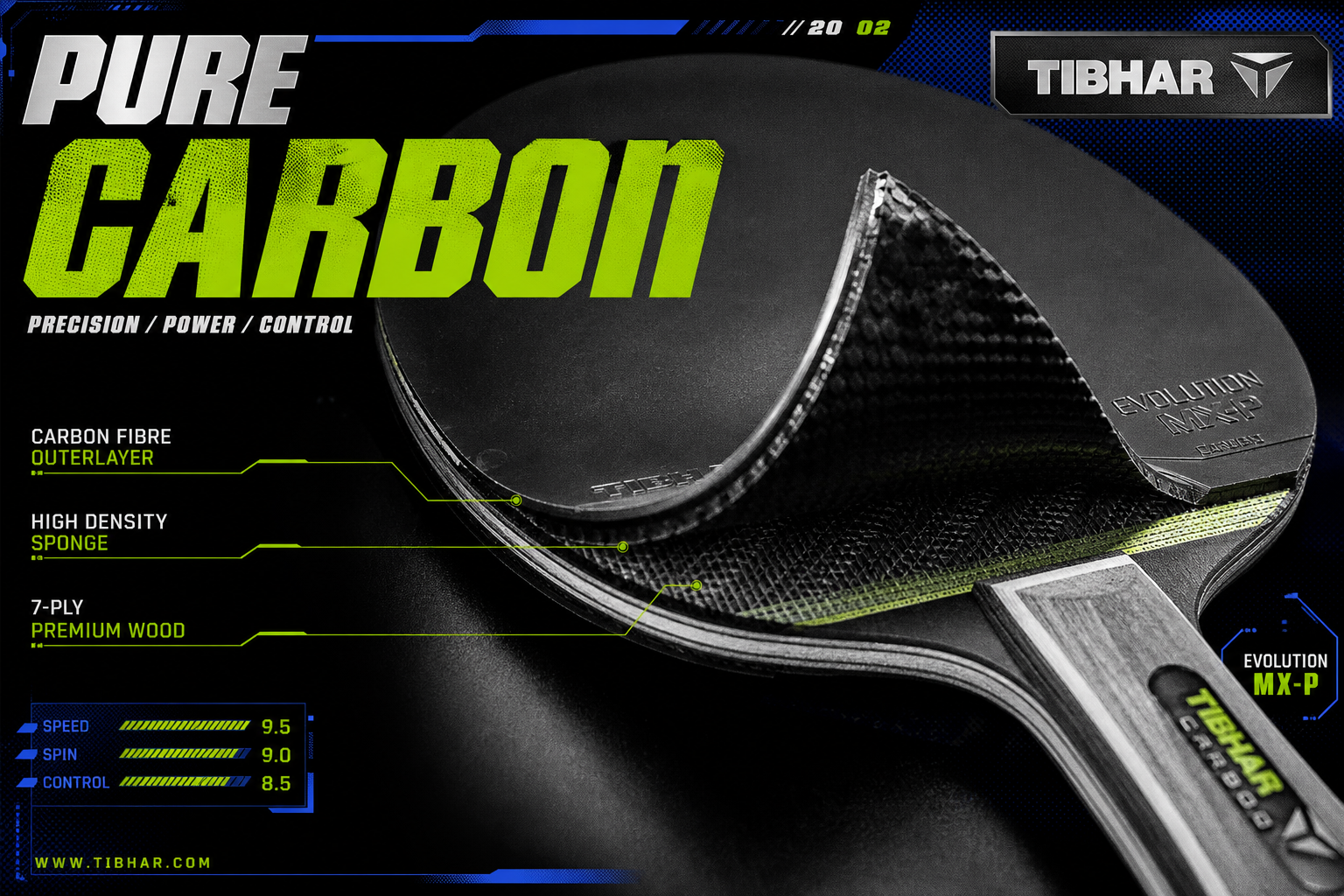
The shift toward carbon-composite blades has become mainstream at UK club level. Players who once competed with all-wood blades are switching to carbon - attracted by the increased speed and the flatter, more direct feel that composite layers provide. The problem is that the most-discussed carbon blades in the table tennis community tend to be the expensive ones: professional-grade equipment from Butterfly, Stiga, or Nittaku that can reach £150 or more.
That pricing is realistic for sponsored players or those investing seriously in the sport. For the majority of UK club players competing in county and local league table tennis, a blade in the £40-£80 range is the practical sweet spot. Several carbon blades in this range compete very credibly with their premium counterparts.
What to Look for in a Value Carbon Blade
Before looking at specific options, understanding what the price difference actually represents is useful.
Premium carbon blades use precisely selected wood plies, high-grade carbon or ALC (Arylate-Carbon) weave, and tight manufacturing tolerances that produce consistent weight distribution across batches. Budget carbon blades may use lower-grade carbon, less consistently selected wood, and variable sponge attachment quality. The play difference is real but often overstated. At club level - where the limiting factor is almost always technique rather than equipment - the performance gap between a £60 carbon blade and a £150 carbon blade is much smaller than manufacturers’ marketing suggests.
Recommended Options
Xiom Vega Pro / Stilo series (£45-£65) Xiom produces several well-constructed carbon blades in this range that have developed a good reputation among UK club players. The Vega blades feature a 5+2 wood-carbon construction (five wood plies, two carbon layers) and a medium-speed feel that suits players transitioning from all-wood. The handle quality is good and available in FL, ST, and AN configurations.
Donic Ovtcharov Carbospeed (£55-£70) The Ovtcharov line from Donic sits in a reliable mid-range position. Donic’s carbon blades use their own carbon-fibre weave specification and have a noticeably stiffer feel than all-wood, with good control for a composite blade. The Carbospeed designation indicates a faster sponge-side response without sacrificing all control. Widely available from UK retailers.
Tibhar Stratus Powerwood Carbon (£50-£65) The Stratus line offers several carbon variants. The Powerwood Carbon uses a central powerwood core, which gives the blade a slight springiness despite the carbon layers - a more forgiving response than a very stiff pure-carbon blade. Suitable for players who want carbon speed without the unforgiving, flat feel that some faster carbon blades produce.
Andro Treiber Carbon (£45-£60) Andro is not as well-known in the UK as some competitors but produces reliable equipment. The Treiber Carbon is a 5+2 construction with a comfortable all-round feel. The blade is well-balanced in the hand and available at the lower end of the value carbon range. Often discounted at specialist UK online retailers.
Yasaka Ma Lin Carbon (£50-£70) Named after the former world champion, the Ma Lin Carbon is an accessible entry into the Yasaka range. It uses a slightly different construction to many competitors - a five-ply wood base with a thin inner carbon layer - which produces a softer carbon feel than many full-outer-carbon blades. This makes it particularly suitable for players who want to add carbon speed without dramatically altering the feedback they receive from the blade.
All-Wood vs. Carbon at Club Level: Does It Matter?
This question deserves an honest answer. For many club players, the difference between a good all-wood blade and a value carbon blade is smaller than the difference between rubber choices or the consistency of technique. A fast all-wood blade (such as a Stiga Allround Classic or a Butterfly Primorac) with good inverted rubber can match or exceed the speed of a slow carbon blade.
The genuine benefit of carbon at club level is the feel during fast exchanges: the ball exits more consistently at high pace, with less vibration, producing a cleaner contact that some players find easier to control in fast counter-loop situations. Whether this benefit outweighs the learning curve of adjusting to a stiffer, faster response depends on the individual.
The practical recommendation: if currently using an all-wood blade and comfortable with the technique being developed, there is no urgent reason to switch. If the all-wood blade feels slow in fast exchanges - if the ball is consistently dropping short or lacking pace in counter-attacking situations - a value carbon blade is a reasonable next step.
Getting the Rubber Match Right
A carbon blade performs differently depending on what rubber is paired with it. A very fast, hard-sponge rubber on a carbon blade can be too demanding for anyone but experienced attackers. A medium-paced inverted rubber (such as Yasaka Mark V, Tibhar Evolution EL, or Andro Rasanter R42) on a value carbon blade is a well-balanced combination for most club-level improving players.
Avoid the temptation to combine the fastest blade with the fastest rubber. The result is typically a very powerful setup that offers less forgiveness for timing errors - and at club level, consistency under pressure matters more than maximum ceiling speed.
Value carbon blades have made composite construction accessible at realistic budgets. The options above are a practical starting point for UK club players looking to add speed to their game without overspending on equipment that outpaces their current technique. For independent equipment reviews and blade testing data, Expert Table Tennis maintains an extensive database of blade and rubber comparisons that is useful for narrowing down specific models.
Common Questions
How much should a club player spend on a carbon blade?
For most UK club players competing in county and local leagues, a blade in the £40-£80 range is the practical sweet spot. Premium blades reaching £150 or more are aimed at sponsored players or those investing seriously in the sport.
Is a carbon blade actually better than all-wood at club level?
Not necessarily. At club level the limiting factor is usually technique rather than equipment. A fast all-wood blade with good rubber can match a slow carbon blade; carbon's main benefit is a cleaner, lower-vibration contact in fast exchanges.
Which rubber suits a value carbon blade?
A medium-paced inverted rubber such as Yasaka Mark V, Tibhar Evolution EL, or Andro Rasanter R42 is a balanced match. Avoid pairing the fastest blade with the fastest rubber, which sacrifices forgiveness for timing errors.
When is it worth switching from all-wood to carbon?
If an all-wood blade feels slow in fast exchanges - the ball dropping short or lacking pace when counter-attacking - a value carbon blade is a reasonable next step. If the current setup feels comfortable, there is no urgent reason to switch.