Forehand Topspin Loop: Fundamentals Every Player Must Know
The forehand loop is the central attacking stroke in modern table tennis. Breaking down its mechanics reveals why most players do it wrong - and how to fix it.
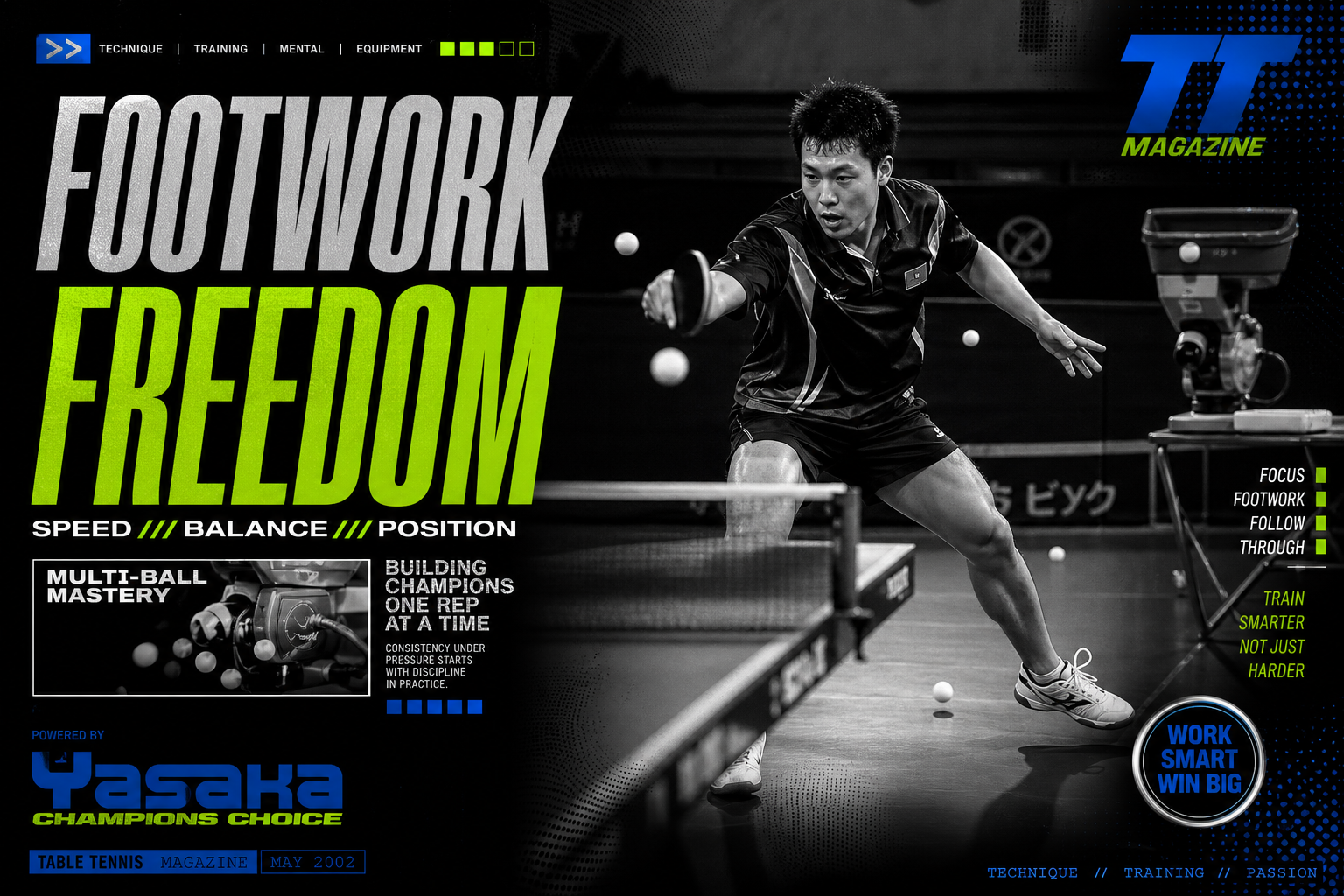
The forehand topspin loop is the defining stroke of modern table tennis. It is the primary mechanism through which most offensive players win points - the stroke that initiates attacks, converts passive exchanges into offensive ones, and generates the kind of spin and speed that forces opponents into errors. Understanding it deeply, and practising it correctly, is the single most valuable technical investment an improving player can make.
This breakdown covers the mechanics of the stroke - body position, swing path, contact, and follow-through - and identifies the most common errors that prevent club players from developing a consistent, effective loop.
What the Loop Is Actually Doing
Before examining mechanics, understanding the physics helps. The forehand loop generates heavy topspin by brushing the back of the ball in an upward direction. The topspin causes the ball to dip rapidly after the peak of its arc and then bounce forward steeply after contact with the table. An opponent receiving a well-looped ball must deal with a ball that is moving fast, spinning strongly, and changing direction unpredictably after the bounce.
The amount of topspin generated is directly related to the speed of the racket head through contact and the angle of the brush. More brush angle (steeper, more upward contact) produces more spin. More racket head speed produces more spin and more pace. The art of the loop is combining both while maintaining enough control to keep the ball on the table.
Body Position and Stance
The starting position for the forehand loop is the ready stance: feet wider than shoulder-width, knees bent, weight slightly forward on the balls of the feet. For the forehand loop specifically, the right foot (for right-handed players) is positioned slightly back - creating a slight diagonal stance that allows the hip rotation which powers the stroke.
This foot position is non-negotiable. Players who attempt to loop from a square stance - feet level - cannot rotate the hips fully and must compensate by swinging with the arm alone. Arm-only loops are inconsistent, slower, and tire more quickly.
The Backswing
The backswing initiates the power chain. The racket drops down and slightly back, with the tip of the racket pointing roughly toward the floor at the lowest point. The free hand (non-racket hand) moves slightly forward as a balance counterweight. The body rotates to the right from the hip - the right shoulder comes back, the left shoulder comes forward - creating the coiled position from which the stroke fires forward.
The backswing should not be excessively large. A compact backswing that drops the racket to hip height is sufficient. An oversized backswing takes longer to execute and makes it harder to time the ball correctly, particularly against faster incoming balls.
Contact: The Critical Moment
Contact is where most errors originate and where improvement has the greatest payoff.
Contact height. The forehand loop is typically struck at the peak of the ball’s bounce or just after - when the ball has stopped rising but has not yet begun to drop significantly. This timing provides the most predictable contact point. Against topspin or neutral balls, the peak is the standard timing. Against heavy backspin (for the opening loop), the timing shifts slightly later, when the ball is at or just past the peak, allowing the player to brush upward through the back of the ball more steeply.
Racket angle. For a loop against a neutral ball, the racket face tilts forward (closes) by roughly 15-25 degrees from vertical. For a loop against topspin, the angle closes more. For a loop against backspin, the angle opens slightly - the racket needs to be more vertical to avoid driving the ball into the net.
The brush. Contact should be a brush - the racket grazes the back of the ball in an upward arc rather than hitting through it. Think of the contact as friction rather than collision. The speed of the brush creates the spin. A common error is striking the ball too flat - the racket hits through the centre of the ball rather than brushing the back, producing a flat, unspinny stroke that sits up and is easy to attack.
Wrist acceleration. At the moment of contact, the wrist accelerates through the ball, adding racket head speed without requiring a larger arm swing. This wrist snap is subtle - not a dramatic flick - but measurably increases the spin and pace of the stroke. The wrist must be relaxed before contact to allow this acceleration. A tight, locked wrist kills spin generation.
The Follow-Through
After contact, the racket follows through in the direction of the stroke - upward and slightly forward. The follow-through finishes with the racket roughly at forehead height, in front of the right shoulder. The elbow remains relatively compact throughout; an elbow that flies out wide during the stroke indicates that the rotation is coming from the arm rather than from the hip and shoulder chain.
After the follow-through, the arm and body reset quickly to the ready position. Failing to reset is one of the most common tactical errors among developing players - they complete the loop beautifully and then stand watching the result instead of recovering position for the next ball.
Looping Against Backspin: the Opening Loop
The opening loop - used to attack a short or long push that carries backspin - is a distinct skill from looping against topspin or neutral balls, and many players find it significantly more difficult.
The key differences are:
Lower contact point. The ball must be contacted slightly later in its flight - at or past the peak - to allow the steeper upward brush needed to overcome the backspin.
More open racket angle. The incoming backspin pushes the ball downward, so the racket needs to be slightly more open (tilted backward) than for a topspin loop to avoid driving the ball into the net.
Greater brush angle. The racket needs to brush more steeply upward through the ball - more vertical and less forward - to generate enough topspin to overcome the incoming backspin and clear the net.
More committed hip rotation. The opening loop typically requires a fuller body rotation than the counter-loop. The ball has less pace, so the player’s own rotation and stroke speed must provide the energy.
The opening loop is often practised in isolation, with a training partner feeding push balls repeatedly while the player focuses on the timing and contact angle. This repetitive approach builds the muscle memory for a stroke that feels different to everything else in the game. Expert Table Tennis offers useful breakdowns of loop drills that complement written technique guides.
Errors and How to Fix Them
Hitting flat (no spin). Symptom: the ball goes long or fast but sits up without spin, inviting a counter-attack. Cause: contact is through the ball rather than brushing the back. Fix: consciously close the racket angle more and focus on the feeling of the ball “rolling” off the rubber rather than “hitting” it.
Ball going into the net. Symptom: the loop hits the net consistently. Cause: racket angle is too closed, or the brush is not steep enough. Fix: open the racket angle slightly and ensure the follow-through is genuinely upward.
Ball floating long. Symptom: the loop is high and lands beyond the table. Cause: racket angle is too open, or contact is too flat with insufficient topspin to bring the ball down. Fix: close the angle more and ensure there is genuine brush on the ball.
Inconsistency in timing. Symptom: sometimes the stroke feels perfect, other times mistimed. Cause: inconsistent contact height - sometimes hitting on the rise, sometimes letting the ball drop. Fix: practise loops from a consistent ball feed (either multi-ball or a reliable training partner) and consciously wait for the peak before initiating the swing.
Building Loop Consistency
Consistency in the forehand loop does not come from training the stroke in isolation indefinitely. It comes from combining technical drill work with the unpredictability of real match situations. A common and effective training pattern is: 20 minutes of forehand loop drilling (against topspin, then against backspin) followed by match play where the specific objective is to open with the forehand loop as often as possible, regardless of the result.
The habit of committing to the forehand loop in match play - rather than defaulting to a safe push when the opportunity exists - is itself a skill that must be practised. Technical ability and tactical habit must develop together for the stroke to become a genuine weapon.
The forehand topspin loop rewards investment. Players who develop a reliable, consistent loop at club level find that the entire structure of their match play changes - from reactive rallying to controlled attacking. That shift is what the stroke is ultimately for. For a full training programme to build on these fundamentals, visit the table tennis training guide - including footwork, multi-ball drills, and match-play structure.
Common Questions
What is the most common mistake when learning the forehand loop?
Striking the ball flat - hitting through its centre rather than brushing the back. Contact should be a brush in an upward arc, treated as friction rather than collision, so the speed of the racket head creates the spin.
Where should the ball be contacted during the loop?
Usually at the peak of the bounce or just after, when the ball has stopped rising but has not begun to drop. Against heavy backspin the timing shifts slightly later to allow a steeper upward brush.
Why does stance matter for the forehand loop?
A slight diagonal stance with the right foot (for right-handers) set back allows the hip rotation that powers the stroke. Looping from a square stance forces an arm-only swing, which is inconsistent, slower, and tiring.
How is the opening loop against backspin different?
It needs a slightly more open racket angle, a steeper upward brush, a later contact point, and fuller hip rotation, because the incoming backspin pushes the ball down and it carries less pace of its own. See the training guide.