Table Tennis Doubles Rules: Serving, Receiving and Order of Play
How doubles differs from singles: the diagonal serve, alternating shots, the service and receiving order, and what happens when players get the order wrong.
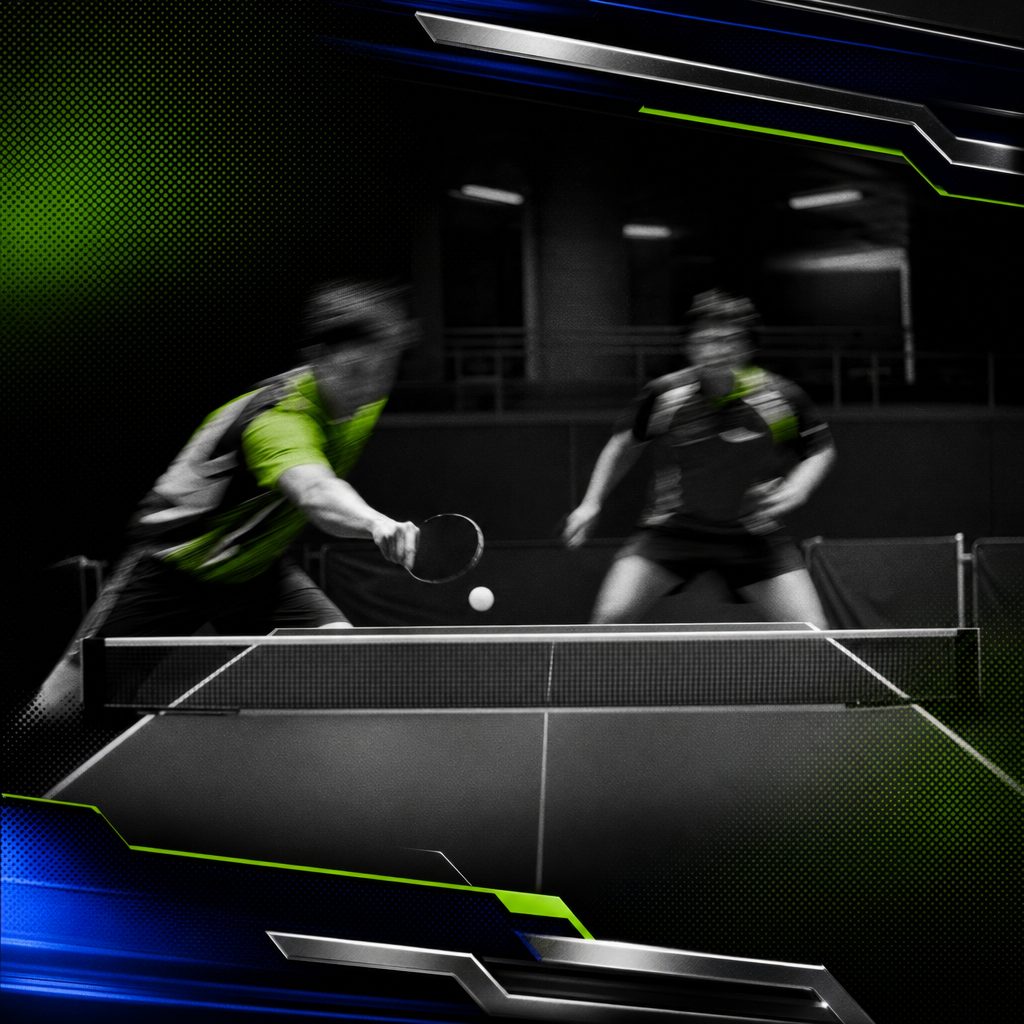
Doubles is one of the most enjoyable formats in table tennis, and a regular part of league matches across the UK. It uses the same table, scoring and service laws as singles, with a handful of extra rules that decide who serves, who receives and who plays each shot. Those rules are simple once understood, but they catch out newer players in almost every club.
This guide explains the doubles-specific laws as set out by the International Table Tennis Federation (ITTF). For the general rules of scoring and serving, see the complete table tennis rules guide.
The Diagonal Serve
The biggest difference from singles is where the serve must land. In doubles, the table is divided into two halves by the white centre line, and the serve has to travel diagonally:
- It must bounce first in the server’s right half court.
- It must then bounce in the receiver’s right half court.
A serve that lands on the centre line is good, because the line belongs to both halves. A serve that lands in either left half court is a fault, and the receiving pair wins the point.
Apart from the landing area, all of the normal service laws apply: an open, flat palm, a near-vertical toss of at least 16 cm, the ball behind the end line and above the playing surface, and no hiding of the ball from the receiver. Those requirements are explained in detail in the rules guide, and the techniques that work within them in our tomahawk serve breakdown.
Alternating Shots
Once the serve is made, players in each pair must hit the ball in turn:
- Player A serves.
- Player X receives.
- Player B (A’s partner) plays the next shot.
- Player Y (X’s partner) plays the next shot.
- Player A plays again, and so on.
If a player hits the ball when it was their partner’s turn, their pair loses the point. This is why doubles footwork is so different from singles: after every shot, a player has to move out of the way so the partner can reach the ball, then move back into position for their own next turn.
Choosing Who Serves and Receives First
At the start of a match, the right to choose serving, receiving or ends is decided by lot, usually by spinning a coin or a racket. The winner of the toss can choose to serve or receive first, or to start at a particular end.
In each game of a doubles match:
- The pair serving first decides which of its two players serves first.
- In the first game, the receiving pair then decides which of its players receives first.
- In the following games, the first receiver is fixed by the previous game: it is the player who served to the first server in the game before.
This sequence means that over a match, each player serves to and receives from both opponents in a regular pattern.
How the Service Order Rotates
The serve changes after every two points, just as in singles. In doubles, the rotation follows a fixed order:
- The player who has just been receiving becomes the server.
- The partner of the previous server becomes the receiver.
With players A and B against X and Y, and A serving first to X, the order runs:
- A serves to X
- X serves to B
- B serves to Y
- Y serves to A
- Back to A serving to X
At 10-10, the serve changes after every point instead of every two, but the same rotation continues.
The Deciding Game
In the last possible game of a match, such as the fifth game of a best-of-five, two things happen when the first pair reaches 5 points:
- The pairs change ends.
- The receiving pair changes its order of receiving.
The second rule keeps the deciding game fair. Without it, the same server and receiver combinations would repeat from the first game, and one pair could keep an advantageous matchup until the end.
When the Order Goes Wrong
Mistakes in the order are common, especially after a change of ends. The laws deal with them simply:
- If a player serves or receives out of turn, the umpire stops play as soon as the error is noticed.
- Play resumes with the players who should be serving and receiving at the current score, following the order set at the start of the game.
- If the players forgot to change ends when they should have, play stops and they change ends at once.
- All points scored before the error was discovered still count.
In club matches without an umpire, the players agree on the correction themselves. A quick check of who served first in the game usually settles the question.
Tactics That Follow From the Rules
The rules shape how good doubles pairs play:
- Short serves dominate. Because the serve must land in the right half court, the receiver knows roughly where it is coming. Short, low serves stop the receiver from attacking straight away.
- Combinations matter. A left-hander and right-hander often pair well, because their natural positions leave each other more room to move.
- Movement patterns. Many pairs move in and out, one stepping back as the other steps in, while others move side to side. Agreeing on one pattern avoids collisions.
- Placement over power. Hitting the ball to where the next opponent is badly placed often wins more points than hitting it hard.
Practising Doubles
Doubles skills improve quickly with deliberate practice. Rally games where each player must move out after every shot build the footwork. Serving and receiving drills, with one pair practising short serves to the right half court, prepare players for match situations. And playing with different partners teaches players to adapt their position to someone else’s style.
For more on training, see the table tennis training guide. To keep score during practice matches, try the free score counter.
Common Questions
Do players have to alternate shots in table tennis doubles?
Yes. The server serves, the receiver returns, then the server's partner plays the next shot, then the receiver's partner, and so on. A pair that hits the ball out of turn loses the point.
Where must the serve land in doubles?
The serve must bounce first in the server's right half court and then in the receiver's right half court, travelling diagonally across the table. A serve that lands on the centre line counts as good.
How does the serving order change during a doubles game?
The serve changes every two points. At each change, the player who was receiving becomes the server, and the partner of the previous server becomes the receiver. Over a game, each player serves to the same opponent.
What happens in the deciding game of a doubles match?
When one pair reaches 5 points in the last possible game, the players change ends and the receiving pair changes its order of receiving. The main rules guide covers the general scoring and service laws.