Table Tennis Umpires and Officials: Roles, Duties and How to Qualify
What umpires, assistant umpires and referees do in table tennis, the decisions each can make, and how to start umpiring in the UK.
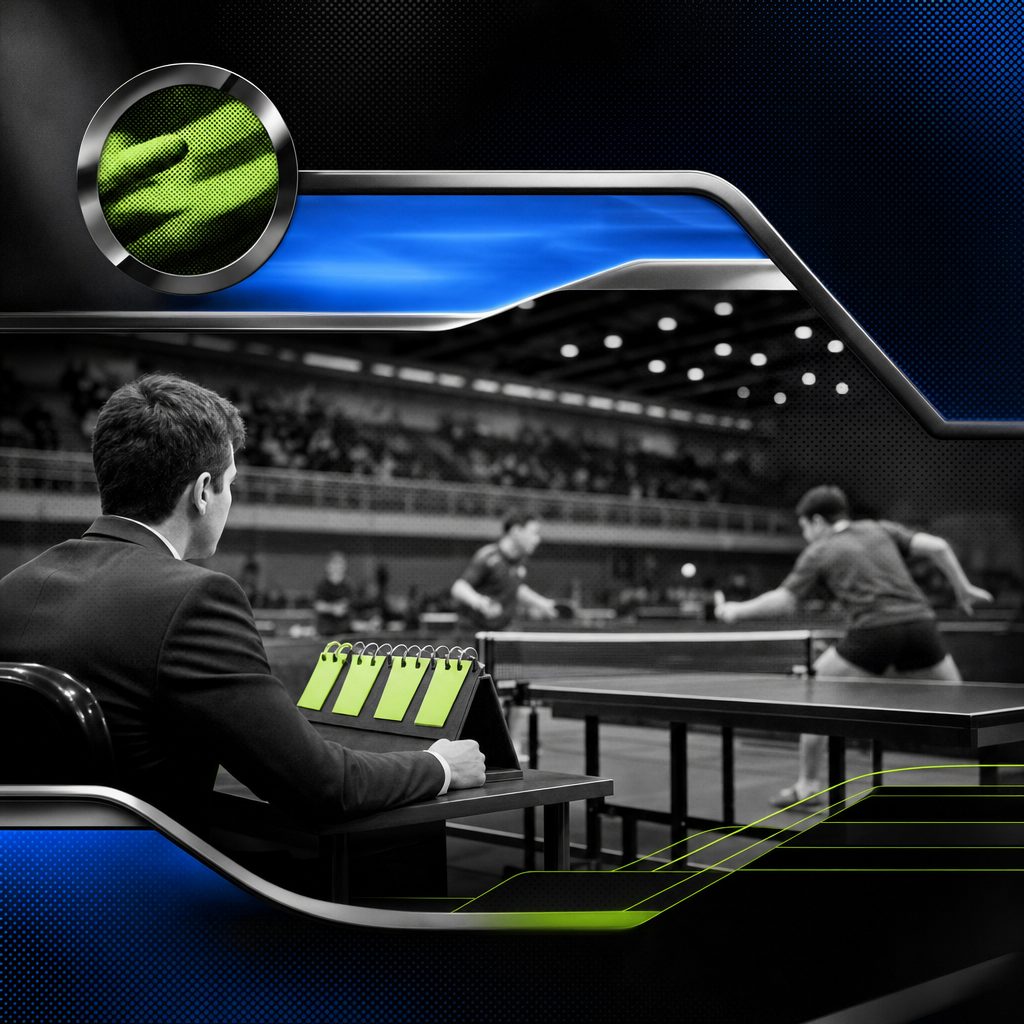
Every table tennis match at a tournament or major championship is run by officials. They make sure the laws are applied the same way at every table, keep the match moving and settle disputes on the spot. For club players, a basic understanding of what officials do also helps in league matches, where players often umpire each other.
This guide explains the main roles, the decisions each official can make and how to start umpiring in the UK.
The Umpire
The umpire sits at the side of the table, level with the net, and is responsible for the match being played. Their duties include:
- Checking equipment and conditions before the match, including the players’ rackets and clothing.
- Conducting the toss to decide who serves, receives or chooses ends first.
- Calling the score clearly after every rally, starting with the score of the player due to serve next.
- Deciding each rally, ruling whether it ends in a point or a let.
- Judging the service, including whether the toss, the position of the ball and its visibility to the receiver meet the laws.
- Controlling time, including the practice period, breaks between games and time-outs.
- Applying the rules on conduct and the expedite system, which speeds up very long games.
At most events, the umpire uses a scoreboard or score indicator so that players and spectators can follow the match.
The Assistant Umpire
At higher-level events, an assistant umpire sits opposite the umpire on the other side of the table. The assistant umpire can make decisions on matters that happen on their side of the table, such as whether the ball touched the edge of the playing surface on the side nearest to them. They can also make decisions on the legality of the service. On most other matters the umpire’s decision is final.
The assistant umpire also helps with practical tasks, such as acting as timekeeper or keeping track of the expedite system, depending on the arrangements at the event.
The Referee
The referee is in charge of the whole competition rather than a single match. Their responsibilities include:
- deciding questions of interpretation of the laws and regulations, which umpires refer to them;
- appointing umpires and assistant umpires to matches;
- dealing with serious misconduct, including the power to disqualify players;
- deciding whether play can continue when conditions change, for example if lighting fails;
- checking that equipment and playing conditions meet the requirements.
A player who disagrees with an umpire’s decision on a question of law can appeal to the referee. Decisions of fact, such as whether a ball touched the table, are the umpire’s to make and cannot be appealed.
Common Decisions at the Table
Most umpiring decisions are routine, but a few situations cause regular debate:
Service faults. The ball must be tossed near-vertically at least 16 cm from an open palm, struck as it falls, and kept visible to the receiver throughout. Hidden serves were a major problem before the laws were tightened, and judging them remains one of the hardest parts of the job.
Lets. A rally is a let, and replayed, if the serve touches the net assembly and otherwise lands correctly, if the receiver was not ready, or if play is disturbed by something outside the players’ control, such as a ball rolling onto the court from another table.
Edge and side balls. A ball that touches the top edge of the table is good. A ball that touches the side of the table below the edge is not. Telling the two apart at speed is not easy, which is why the assistant umpire watches the far side.
Racket and clothing. Racket coverings must be ITTF-approved, one side black and the other a different, clearly distinguishable colour. Players’ clothing must not be the same colour as the ball.
The full laws behind these decisions are explained in our complete table tennis rules guide.
How to Start Umpiring in the UK
Each home nation runs its own officiating pathway.
England. Table Tennis England runs a structured pathway for umpires. The first step is the Level 1 County Umpire course, which covers the laws, scoring and handling unusual situations at the table. Higher levels are gained through experience at events, written exams and practical assessments. At the top of the pathway, the most experienced umpires can progress to international level and earn the ITTF Blue Badge, which qualifies them for major international events. Table Tennis England also offers a Young Officials Award for people aged 16 to 19.
Wales and Scotland. Table Tennis Wales and Table Tennis Scotland organise officials for their national events and can advise on training opportunities.
For anyone interested, the practical route is the same everywhere: contact the national association, attend a course and then start umpiring at local tournaments, where help is always welcome.
Why Umpiring Is Worth Doing
Umpiring is a good way to stay involved in the sport, especially for players who no longer compete as much. It also improves your own game. Umpires develop a precise understanding of the service laws, learn to read spin from the side of the table and see how top players manage the pressure of tight games.
For club players, even without formal qualifications, knowing how an umpire calls a match makes league matches smoother. Calling the score clearly before each serve, agreeing on lets and applying the service rules consistently avoids most disputes before they start.
To keep score in practice matches, try our free table tennis score counter. For an overview of how results feed into rankings, see table tennis rankings explained.
Common Questions
What does a table tennis umpire do?
The umpire controls the match at the table: checking equipment, conducting the toss, calling the score, deciding whether each rally is a point or a let, judging the service and applying the laws on conduct and time.
What is the difference between an umpire and a referee?
The umpire runs a single match. The referee is in charge of the whole competition, deciding questions of interpretation of the laws and regulations that umpires refer to them, and dealing with matters such as disqualification.
How do I become a table tennis umpire in the UK?
In England, the usual starting point is a Level 1 County Umpire course run by Table Tennis England, with further levels gained through experience and assessment. Wales and Scotland run their own officiating pathways.
Do club league matches need an umpire?
Most local league matches are played without a dedicated umpire. Players usually umpire each other's matches or agree the score themselves. Knowing the service rules properly helps avoid disputes.