How the 40mm Poly Ball Changed Table Tennis Forever
The switch from celluloid to poly wasn't just a material change - it reshaped technique, rubber design, and the tactics of the modern game.
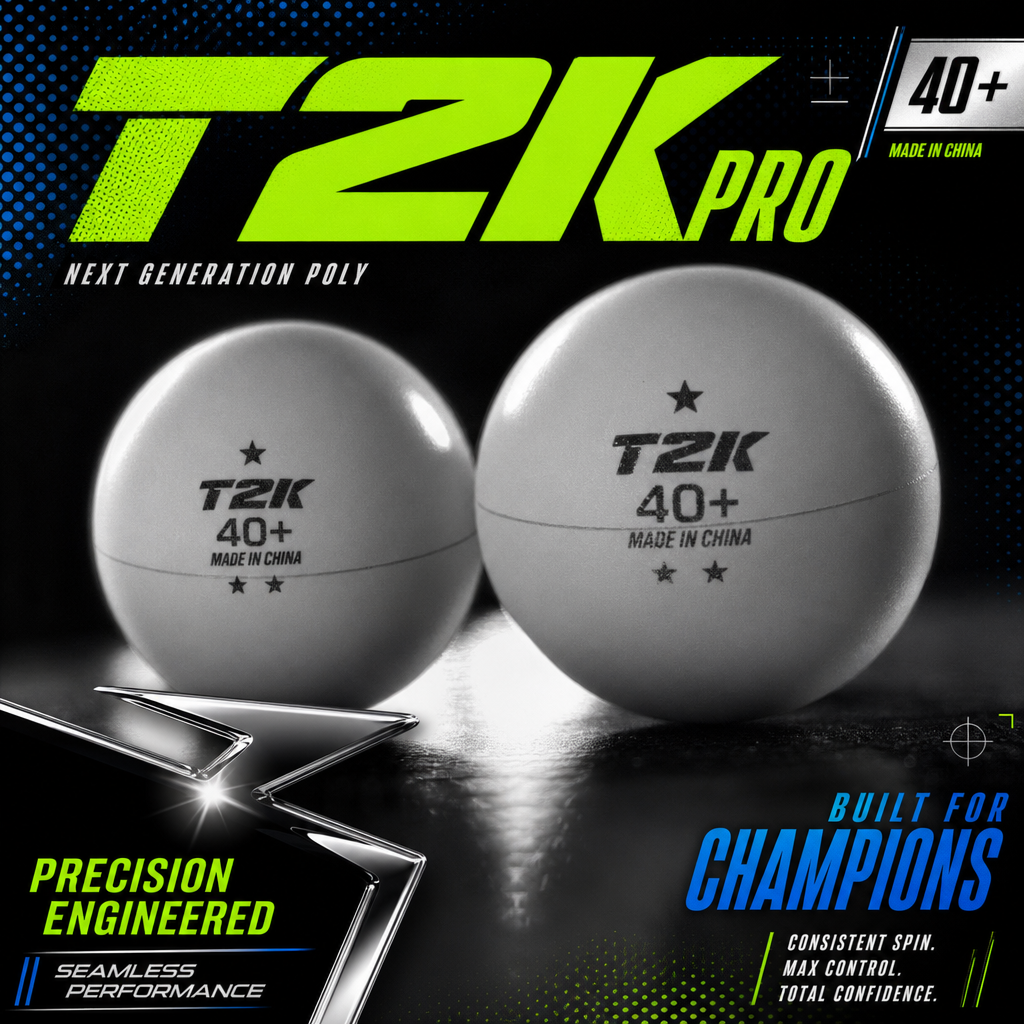
In the history of table tennis equipment, no single change has had a wider impact on the game than the switch from celluloid to poly balls. The transition, mandated by the International Table Tennis Federation (ITTF) and introduced for ITTF sanctioned and world title events from 1 July 2014, with national associations following in the years after, was driven by practical concerns: celluloid is flammable, difficult to transport by air, and inconsistent in manufacture. What no one fully anticipated was how deeply the material change would alter the way the game is played.
The Celluloid Ball: A Century of Bounce
The table tennis ball was made from celluloid for over a century. The material produced a light, hollow sphere with a distinctive acoustic click on contact with rubber - a sound that became synonymous with the sport. Celluloid balls were well-understood: players, coaches, and rubber manufacturers had spent decades calibrating equipment and technique to their specific physical properties.
The celluloid ball responded enthusiastically to spin. The high-friction contact between rubber topsheets and the celluloid surface allowed extreme levels of rotation, and by the early 2000s, professional players were generating loops with spin rates that pushed the physical limits of what the ball could handle.
The flammability issue was not new. Celluloid - the same material used in early cinema film - burns readily and had caused warehouse fires at table tennis equipment manufacturers. As air freight regulations tightened and insurance costs rose, the ITTF began considering a replacement material seriously.
The 38mm to 40mm Transition (2000)
The first major ball change of the modern era was the increase from 38mm to 40mm diameter in 2000. This increase was less dramatic in material terms - the ball was still celluloid - but it produced meaningful changes to play. The larger diameter ball moved through the air more slowly, was easier to see in television coverage, and was slightly harder to spin at very high rates. Service spin was reduced and rallies lengthened.
Many players and observers at the time believed this was the end of equipment-driven change. The 40mm celluloid ball was the standard for fifteen years.
The Poly Transition: What Actually Changed
The 40+ poly ball introduced in 2014 looked similar to its celluloid predecessor but played differently in several important ways.
Lower spin response. The surface friction between rubber and poly was measurably lower than between rubber and celluloid. The same stroke technique, applied with the same rubber, generated less spin on the poly ball. Players widely reported less spin and a slightly slower ball - a meaningful difference at the margins of elite play. The ”+” on the stamp reflects the slightly larger size of the plastic ball.
Different acoustics and feel. The poly ball produced a noticeably different sound on contact - slightly duller, less crisp. This was not just aesthetic: the different acoustic signature indicated a different energy transfer on contact. Many players found the poly ball felt “hollow” or “dead” in the early transition period, though this perception partly reflected unfamiliarity rather than objective performance.
Seam variability. Most poly balls are made from two halves joined at a visible seam, although seamless balls are also produced. Early poly balls had significant variability in seam quality, which caused erratic bounces and inconsistent flight paths. This was a major point of criticism in the first two years of the transition. Manufacturing quality has improved substantially since the first plastic balls, and the top three-star balls from leading manufacturers now produce highly consistent play.
Slower overall pace. The poly ball is very slightly heavier than celluloid (2.7 grams, same specification, but material density varies slightly in practice). Combined with the different aerodynamic profile, the poly ball moves through the air marginally more slowly - particularly in very fast exchanges close to the table.
How Technique Adapted
The reduction in spin generation was the change that most directly affected how players trained and competed.
The opening loop against backspin became harder. This fundamental stroke in attacking play relied on generating enough topspin to overcome the incoming backspin and clear the net. With less spin response from the poly ball, players had to generate more from stroke speed and contact quality alone. Coaches began placing greater emphasis on the technique of the loop - steeper brush angle, faster wrist, lower contact point - to compensate.
Serve effectiveness reduced. Service spin is fundamentally limited by ball-rubber friction. With lower friction, the most deceptive high-spin serves became slightly less effective. The no-spin variation, by contrast, remained equally viable - so the spin differential within a serve repertoire (the gap between a heavily-spun and a nearly flat serve using the same motion) narrowed at the highest levels.
Short game gained importance. Because the poly ball is marginally slower and carries slightly less spin, the short game - the battle for the first few balls of a rally - became a more decisive arena. Players who could control the ball at low pace, force short exchanges, and limit the opponent’s attack developed a relative advantage.
How Rubber Manufacturers Responded
The rubber industry adapted more quickly than most observers expected. Within two years of the poly transition, manufacturers had released updated rubber formulations specifically designed to compensate for reduced poly-ball friction.
Higher-grip topsheets. Several manufacturers developed new polymer formulations for the topsheet surface that provided more grip on the poly ball - attempting to recover some of the lost friction.
Higher-tension sponges. European and Japanese manufacturers increased the tension and elasticity of sponge layers to add “automatic” speed and spin contribution from the rubber itself, compensating for the reduced energy transfer from ball-rubber contact.
Tacky rubber adoption. Chinese-style tacky rubbers - which had always relied on adhesive surface friction for spin generation - showed better relative spin performance on poly balls than non-tacky European rubbers. This triggered a wave of hybrid rubber development combining tacky Chinese topsheets with faster European-style sponges - a trend explored in detail in our hybrid rubber revolution guide.
The Game in 2026
More than a decade after the poly transition, the game has stabilised around the new equipment. Technique, rubber design, and training methods have fully adapted to poly-ball characteristics. Players who began competing after 2014 have no frame of reference for celluloid - for them, the poly ball is simply the ball.
The fundamental complaint from the early transition period - that the new ball was “dead” and that spin-heavy play had been undermined - proved partly correct and partly overstated. Spin levels at the professional game remain extraordinary by any objective standard. The tactical balance did shift: the short game became more contested, and the first-ball attack became marginally harder to execute with devastating spin. But the core of what makes table tennis visually spectacular and technically demanding remained intact.
The poly ball change is a reminder that the history of the sport is shaped as much by material decisions as by players. Equipment determines what is possible; the game adapts around those limits. For a full breakdown of how ball, rubber, and blade interact, see the table tennis equipment guide.
Common Questions
When did table tennis switch from celluloid to poly balls?
The ITTF switched its sanctioned and world title events to plastic balls from 1 July 2014, and national associations followed over the next few seasons. An earlier change in 2000 increased the diameter from 38mm to 40mm while the ball was still celluloid.
Why was the celluloid ball replaced?
Celluloid is flammable, difficult to transport by air, and inconsistent to manufacture. As air-freight regulations tightened and insurance costs rose, the ITTF moved seriously towards a replacement material.
Does the poly ball really carry less spin?
Yes. The surface friction between rubber and poly is measurably lower than with celluloid, and players widely reported less spin and a slightly slower ball - a meaningful difference at the margins of elite play.
How did equipment adapt to the poly ball?
Manufacturers introduced higher-grip topsheets and higher-tension sponges, and triggered a wave of hybrid rubbers combining tacky Chinese topsheets with faster European sponges. See the hybrid rubber guide for detail.