The Hybrid Rubber Revolution: What UK Players Need to Know
Hybrid rubbers blend tacky Chinese topsheets with high-tension sponges. Here's what the technology actually does and whether it suits your game.
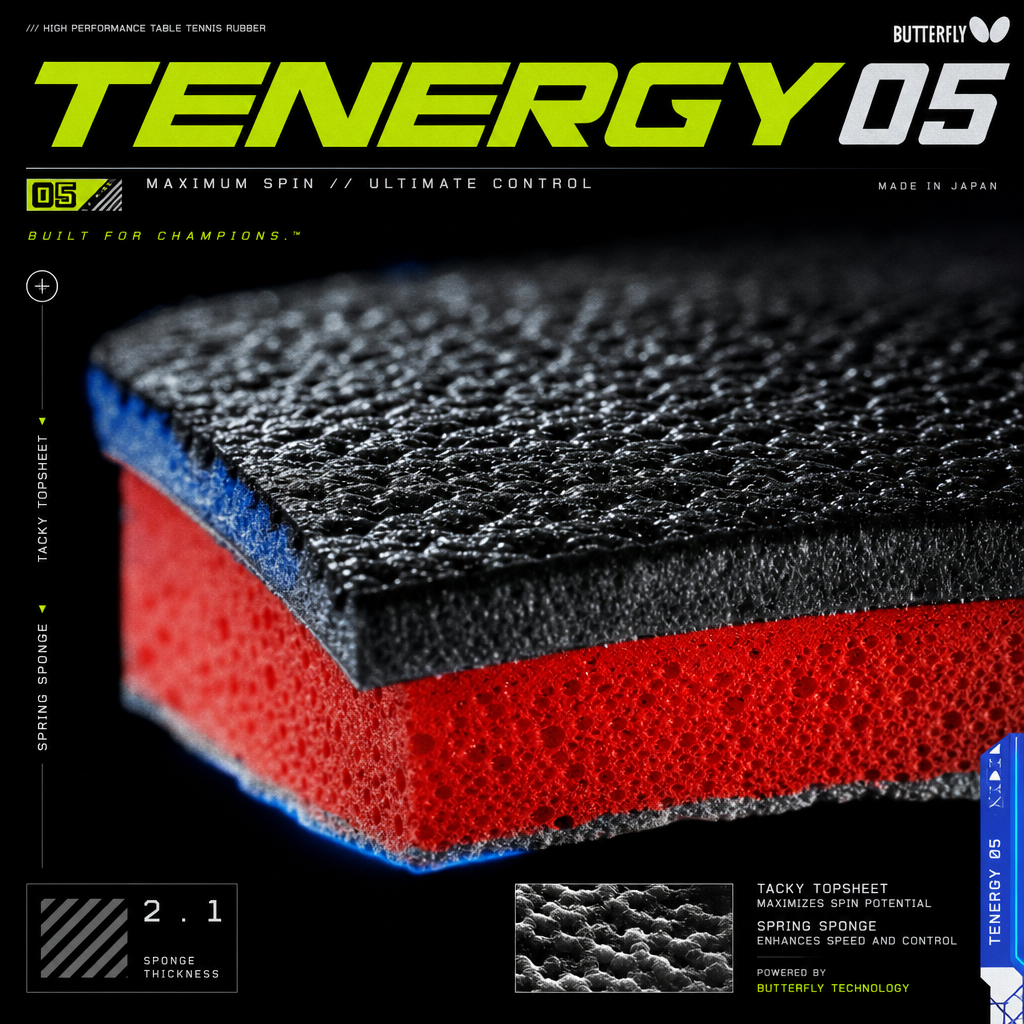
The table tennis rubber market has always been divided along clear cultural lines. Chinese-style rubbers prioritised tack and grip - the surface clung to the ball and generated enormous spin at the cost of raw speed. European and Japanese high-tension rubbers took the opposite approach: springy, fast, slightly less grippy, built for the powerful looping game that developed in the post-celluloid era.
For decades, players chose a camp and stayed there. The hybrid rubber has changed that calculus entirely.
What Is a Hybrid Rubber?
A hybrid rubber combines the tacky Chinese-style topsheet with a high-tension European-style sponge. The idea is that the tacky surface provides high-friction contact - maximising spin generation - while the elastic, high-tension sponge gives the rubber the speed and automatic springiness that defines modern European play.
In theory, this sounds like the best of both worlds. In practice, it is more nuanced - but the technology has genuinely matured to the point where several hybrid rubbers are now used at professional level, which is a meaningful endorsement.
The Technical Challenge Hybrids Had to Solve
Pairing a tacky topsheet with a fast, springy sponge creates a mechanical tension. Tacky surfaces work by maximising contact time between the ball and the rubber - that prolonged grip is what allows extreme spin. High-tension sponges, by contrast, release the ball quickly. Early hybrid attempts produced rubbers that felt confused: not tacky enough to deliver Chinese spin levels, not fast enough to match European rubbers in speed exchanges.
Modern hybrid manufacturing has resolved much of this through advances in topsheet polymer chemistry and sponge cell structure. The latest generation - including rubbers such as the Nittaku Fastarc G-1 variants, the DHS Hurricane line in newer versions marketed internationally, and Yasaka’s Rakza series - demonstrates that the pairing can work at high performance levels.
What Hybrid Rubbers Do Well
Serve generation and touch play. The tacky surface excels at the soft touch shots that characterise short-game play - delicate pushes, flicks, and serve-return nudges. A rubber that grips the ball firmly at low pace gives a player more control over the direction and spin of these critical early-ball exchanges.
Topspin against backspin. The tacky surface catches the ball and allows a steep brush even on heavy backspin balls. Players who struggle to loop against deep backspin with a non-tacky rubber often find hybrid rubbers more forgiving in this specific situation.
Service spin. Serves generated with a tacky topsheet carry noticeably more spin variation. The differential between a heavy-backspin serve and a no-spin serve of the same motion is greater with a tacky surface, creating more return difficulties for the opponent.
Where Hybrid Rubbers Are Less Clear-Cut
Consistency in fast exchanges. At very high speeds - counter-topspin exchanges close to the table - the tacky topsheet can feel slightly “grabby” compared to a smooth non-tacky surface. Players accustomed to fast European rubbers sometimes report that the contact feels different at pace, requiring an adjustment period.
Cold weather performance. Tacky rubbers are sensitive to temperature. In unheated venues - a significant factor at UK clubs during winter - the tack level drops noticeably, affecting the rubber’s grip characteristics. Players who compete in cold halls through the UK club season should be aware of this variable.
Maintenance. Tacky rubbers require more careful cleaning and protective film storage than non-tacky rubbers. Leaving a tacky surface exposed to air degrades it faster.
Are Hybrid Rubbers Right for UK Club Players?
The answer depends on playing style and aspiration. Players who already have a well-developed European high-tension game and are comfortable with fast, spinny exchanges may not find a meaningful benefit from switching. The adjustment period is real, and the improvement in specific areas (serve, short game, backspin looping) may not outweigh the disruption to trained technique.
For players who have trained on Chinese-style rubbers and want to add more speed to their game without abandoning the spin qualities they have built technique around, a hybrid is a sensible progression. The speed uplift is genuine; the spin characteristics are more familiar than a pure high-tension rubber.
For beginners and improving intermediates, neither pure Chinese nor hybrid rubbers are the best starting point. A medium-paced, non-tacky inverted rubber allows technique development without the additional variables of extreme tack or high spring tension. Our table tennis equipment guide covers which rubber types suit which stages of development.
The Market in 2026
The hybrid rubber category has expanded significantly. Several Chinese manufacturers now produce rubbers specifically designed for European play - combining tacky sheets with harder, faster sponge options. DHS, Palio, and Yinhe all offer products in this space at various price points. European brands including Donic and Tibhar have developed their own hybrid-adjacent products with semi-tacky topsheets.
For UK players interested in exploring the category, trying a rubber at a club before purchasing - or choosing a supplier with a reliable return policy - is the most practical approach. The performance difference between hybrid rubbers at the same price point can be surprisingly large, and the interaction between a specific rubber and a specific blade is not always predictable from published ratings alone. See our separate guide on best value carbon blades for club players for blade pairing recommendations in the £40-£80 range.
The hybrid rubber has established itself as a legitimate category rather than a marketing gimmick. Whether it is the right choice depends on the player, but the technology has matured to the point where the question is worth asking seriously.
Common Questions
What is a hybrid table tennis rubber?
It combines a tacky Chinese-style topsheet with a high-tension European-style sponge - aiming to pair the high-friction grip that generates spin with the speed and springiness of modern European rubber.
What do hybrid rubbers do well?
They excel at serve spin, soft touch and short-game control, and looping against heavy backspin, where the tacky surface catches the ball and allows a steep brush even on a deep backspin ball.
What are the drawbacks of hybrid rubbers?
They can feel slightly grabby in very fast counter-topspin exchanges, lose tack in cold unheated halls (a real factor in the UK club winter), and need more careful cleaning and protective-film storage than non-tacky rubbers.
Are hybrid rubbers a good choice for beginners?
No. Beginners and improving intermediates are better served by a medium-paced, non-tacky inverted rubber, which lets technique develop without the extra variables of extreme tack or high spring tension. See the equipment guide.