Para Table Tennis: Classes, Rules and How to Get Involved
A guide to para table tennis: the 11 sport classes, rule adaptations for wheelchair players, the sport at the Paralympics and how to find a UK club.
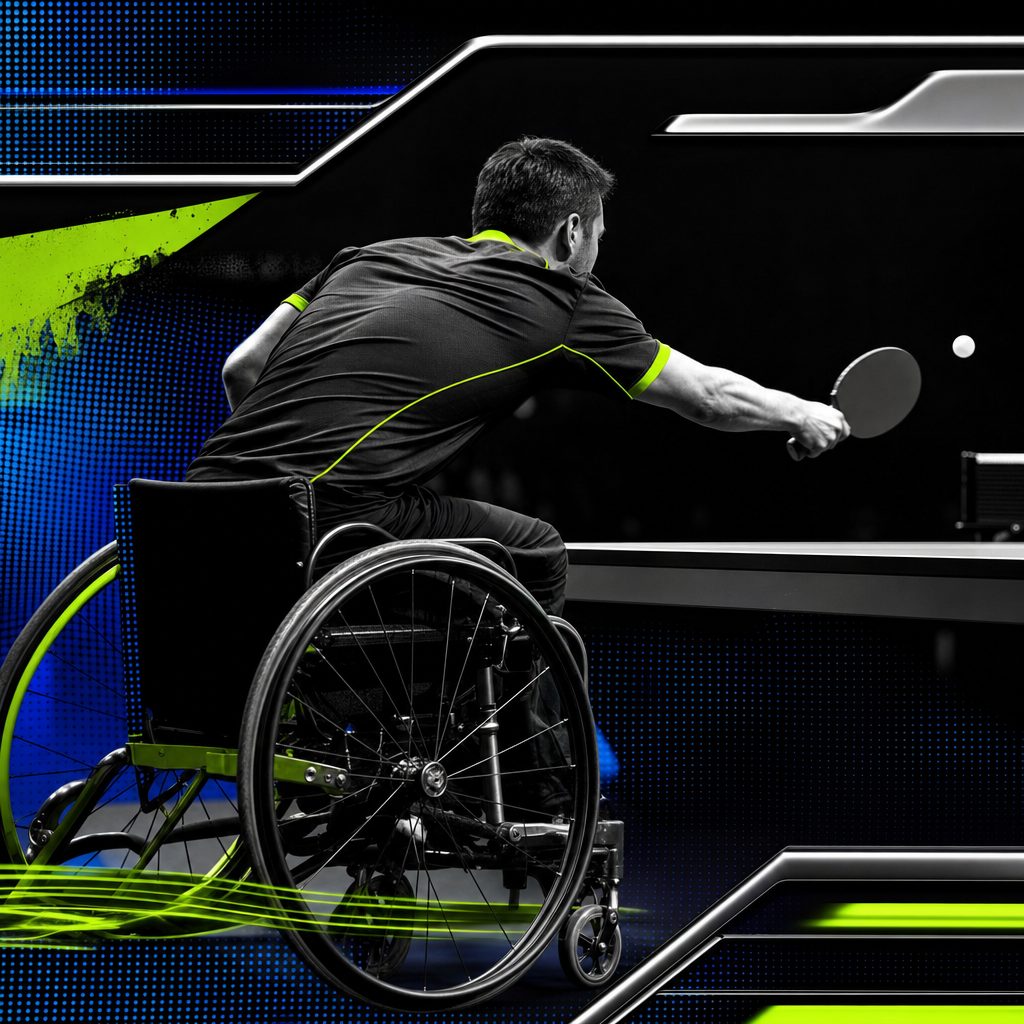
Para table tennis is table tennis played by athletes with a physical or intellectual impairment. It is one of the longest-established Paralympic sports and one of the most accessible racket sports for disabled players, because the compact table and fast exchanges reward skill, touch and tactical thinking as much as mobility.
This guide explains how the sport is organised, how the rules are adapted and how to get involved in the UK.
The 11 Sport Classes
To make competition fair, players are grouped into sport classes according to how their impairment affects their ability to play. The system has 11 classes:
- Classes 1 to 5: wheelchair players. Class 1 is for players with the most significant impairment of the trunk and arms; class 5 for players with full arm and trunk function who compete in a wheelchair because of leg impairments.
- Classes 6 to 10: standing players. Class 6 covers players with significant impairments affecting both arms and legs; class 10 covers players with relatively minor impairments, such as a limited range of movement in one joint.
- Class 11: players with an intellectual impairment.
Within the wheelchair and standing groups, a lower number means a more severe impairment and a higher number means more function. The classification is functional: it looks at how the impairment affects play, such as balance, reach and grip, rather than at the medical diagnosis alone.
Players are assessed by trained classifiers, who observe them on and off the table. A player’s class can be reviewed as their condition changes.
How the Rules Are Adapted
Para table tennis uses the same laws as the standing game, with a small number of adaptations, mainly for wheelchair play.
The serve in wheelchair play. A serve is a let, and replayed, if the ball:
- leaves the receiver’s side of the table across a side line after bouncing;
- comes to rest on the receiver’s side of the table; or
- after bouncing on the receiver’s side, comes back in the direction of the net.
Together, these rules prevent serves that are almost impossible to return from a wheelchair.
Position. Wheelchair players must stay seated while playing, keeping contact with the seat or cushion when they strike the ball.
Doubles. In wheelchair doubles, the ball can be returned by either player in a pair after the serve and return, rather than strictly alternating, although players must not let a part of their wheelchair cross the imaginary extension of the centre line.
Players with impairments that make a standard toss difficult can also be allowed an adapted service toss.
For the standard laws on scoring, serving and lets, see our complete table tennis rules guide, and for doubles in the standing game, the guide to doubles rules.
Para Table Tennis at the Paralympic Games
Table tennis has been part of the Paralympic Games since the very first Games in Rome in 1960. At first it was open only to wheelchair users. Standing classes were added later, and players with an intellectual impairment now compete in class 11.
Today, the Paralympic programme includes singles events in each sport class, along with doubles and team events that combine classes. Great Britain has a strong record in the sport, with medals at recent Paralympic Games.
Equipment and Practical Adaptations
Most para players use standard rackets, balls and tables. Some adaptations help players with particular impairments:
- Grip aids, such as straps or bandages, help players with limited hand function hold the racket securely.
- Wheelchair setup, including seat height, cushion and wheel camber, makes a big difference to reach and stability. Many players use chairs adapted for sport.
- Table access. A table suitable for wheelchair play needs legs set back far enough from the end line for a wheelchair to fit underneath.
Our table tennis equipment guide covers rackets and rubbers in more detail.
Getting Involved in the UK
Table tennis is one of the easiest sports for disabled players to try. Many ordinary clubs welcome players with disabilities, and some run dedicated para sessions.
- Find a club. Table Tennis England, Table Tennis Wales and Table Tennis Scotland can point players towards accessible clubs and para sessions. Our guide to finding a table tennis club in the UK explains what to expect.
- Get classified. Players who want to compete in para events need a classification. National associations arrange classification at events and can explain the process.
- Compete. Para players can play in their own events and, in many cases, alongside non-disabled players in local leagues and tournaments.
Why Para Table Tennis Works
Table tennis rewards anticipation, spin control and placement, which means players can be highly competitive whatever their mobility. The format is also fast and easy to follow, which makes para table tennis one of the most watched sports at the Paralympic Games.
For players starting out, the same advice applies as in the standing game: learn sound basic strokes, practise serves and returns and play regularly. The beginners guide and training guide are good next steps.
Common Questions
How many classes are there in para table tennis?
There are 11 sport classes. Classes 1 to 5 are for players who compete in a wheelchair, classes 6 to 10 for players who compete standing, and class 11 for players with an intellectual impairment. Within each group, a lower number means a more severe impairment.
How long has table tennis been part of the Paralympic Games?
Table tennis has been on the Paralympic programme since the first Games in Rome in 1960. It was originally open only to wheelchair users, with standing classes added in later Games.
Are the rules different for wheelchair players?
The rules are largely the same, with some adaptations. The main one concerns the serve: in wheelchair play, a serve that leaves the table over a side line, or stops on the receiver's side, is a let and is replayed.
Can disabled players join ordinary table tennis clubs?
Yes. Many clubs welcome players with disabilities, and table tennis is one of the most accessible racket sports. The club guide explains how to find a club near you.